Just a reminder that this week is a bye week for the History of the Twentieth Century. We’ll be back next Sunday with a new episode that takes a further look at the Roosevelt Administration in the USA.
Author: Mark
020: Heart of Darkness II

King Leopold’s claim to the Congo is recognized by the Western nations, and he sets to work to extract as much money from the Congo as possible, with no regard for the lives or welfare of the people living there, until he is exposed by Roger Casement, the British consul in the Congo.
Transcript.
Transcript provided by listener Josh.
Playlist:
Fanfare
Opening Theme
Trois Odes Funèbres (Three Funeral Odes)
Composed in 1866 by Franz Liszt. Public domain.
Performed by Mauro Tortorelli, and used pursuant to a Creative Commons license. Details.
Closing Theme
Except when otherwise indicated, the contents of this podcast are
© and ℗ 2016 by Mark Painter, all rights reserved. Some sound effects used by arrangement with Pond 5.
019: Heart of Darkness I

King Leopold II of Belgium, unsatisfied with reigning over “a small nation of small people,” decides what he really needs is a colonial empire to call his very own.
Transcript.
Transcript provided by listener Josh.
Playlist:
Fanfare
Opening Theme
Trois Odes Funèbres (Three Funeral Odes)
Composed in 1866 by Franz Liszt. Public domain.
Performed by Mauro Tortorelli, and used pursuant to a Creative Commons license. Details.
Closing Theme
Except when otherwise indicated, the contents of this podcast are
© and ℗ 2016 by Mark Painter, all rights reserved. Some sound effects used by arrangement with Pond 5.
018: The Spectre Haunting Europe

The stark economic inequalities of the era inspire a new political movement.
Transcript.
Transcript provided by listener Josh.
Playlist:
Fanfare
Opening Theme
Academic Festival Overture
Composed in 1880 by Johannes Brahms. Public domain.
Performed by the Skidmore College Orchestra. Public domain. Source.
Closing Theme
Except when otherwise indicated, the contents of this podcast are
© and ℗ 2016 by Mark Painter, all rights reserved. Some sound effects used by arrangement with Pond 5.
Mid-week Update
So the episode on dreadnoughts that I started writing last week turned into a two-parter, because it turns out I have a lot to say about naval arms races. Who could have guessed?
But I’m fleshing out these two episodes by talking about other aspects of diplomacy among the Great Powers during this time, 1904-07, during and immediately after the Russo-Japanese War. There was a lot going on. France was angling to take over Morocco, Italy was eyeing Libya, the British were trying to smooth over relations with France, Russia, and Germany, as well as keep up with the German naval buildup.
This Sunday’s episode, The Spectre Haunting Europe is almost ready. The weather forecast for where I live is for a heavy snowstorm Friday night through midday Sunday. It’s possible I may lose electricity or Internet service during this time, so I’m going to try to pre-post Sunday’s episode before the storm gets here, just in case. But if next Sunday’s episode is late, the storm will be the reason.
017: Such a Bully Pulpit

Listen.
Download.
Transcript.
Transcript provided by listener Joseph M.
Playlist:
“The Twentieth Century Rag”
“The Entertainer” Composed in 1902 by Scott Joplin. Public domain.
Closing Theme
Except when otherwise indicated, the contents of this podcast are © and ℗ 2016 by Mark Painter, all rights reserved. Some sound effects used by arrangement with Pond 5.
Dreadnought

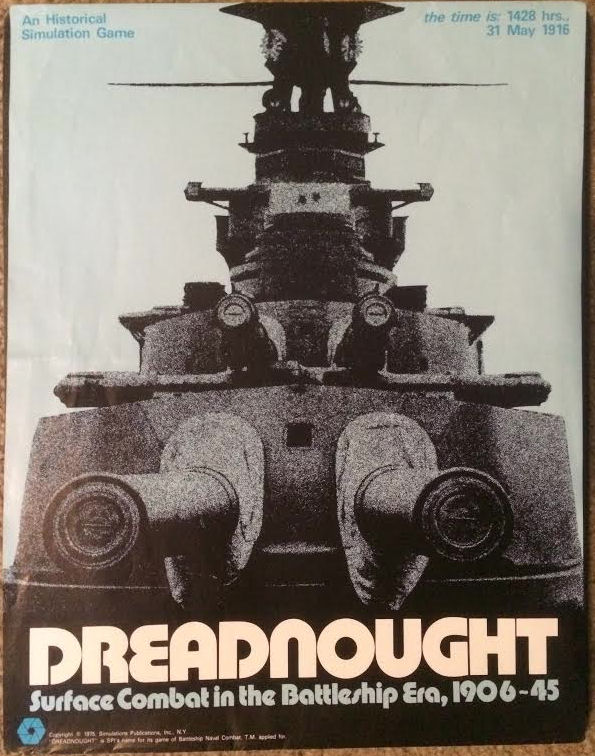
One of the resources I am using for the episode on dreadnoughts, is this 1975 SPI wargame, which includes individual counters, individually rated, for every dreadnought battleship ever produced. Here are the Brazilian and Argentine dreadnoughts from the game:

Mid-week Update
I write the scripts for The History of the Twentieth Century podcast months ahead of time. This week, I’m working on an episode about dreadnoughts and the naval arms races of the early 20th century. Best known is the Anglo-German arms race, but the Americans and the Japanese were also eyeing each other uneasily. And then there was the surprising South American naval arms race between Chile, Argentina, and Brazil. Tentative title is “Dreadnought!” With a “!”
I’ve also been doing some reading on the Ottoman Empire. The podcast needs a backgrounder on the Ottomans.
As promised, this Sunday’s episode will be about the early days of the unexpected Roosevelt administration. The title will be “Such a Bully Pulpit.” I plan to put some Scott Joplin into the episode, and am working on getting that to sound right.
016: Assassin’s Creed

The course of American history changes when the staid, conservative William McKinley is shot and killed by an anarchist assassin, and the improbable Theodore Roosevelt becomes President of the United States.
Transcript.
Transcript provided by listener Josh.
Playlist:
Fanfare
Opening Theme
“There’ll Be a Hot Time in the Old Town Tonight”
Composed in 1896 by Theodore August Metz. Public domain.
Symphony No. 3 in E♭ Major (“Eroica”)
Composed in 1804 by Ludwig van Beethoven. Public domain.
Performed by Czech National Symphony Orchestra. Public domain. Source.
Closing Theme
Except when otherwise indicated, the contents of this podcast are
© and ℗ 2016 by Mark Painter, all rights reserved. Some sound effects used by arrangement with Pond 5.
015: Taels I Win

Western reinforcements pour into China and the tide turns in their favor. But can they reach their embassies in Beijing in time?
Transcript.
Transcript provided by listener Josh.
Playlist:
Fanfare
Opening Theme
“There’ll Be a Hot Time in the Old Town Tonight”
Composed in 1896 by Theodore August Metz. Public domain.
“Liuyang River”
Traditional. Public domain.
Recording by David290 licensed under a Creative Commons license. Details.
Closing Theme
Except when otherwise indicated, the contents of this podcast are
© and ℗ 2016 by Mark Painter, all rights reserved. Some sound effects used by arrangement with Pond 5.